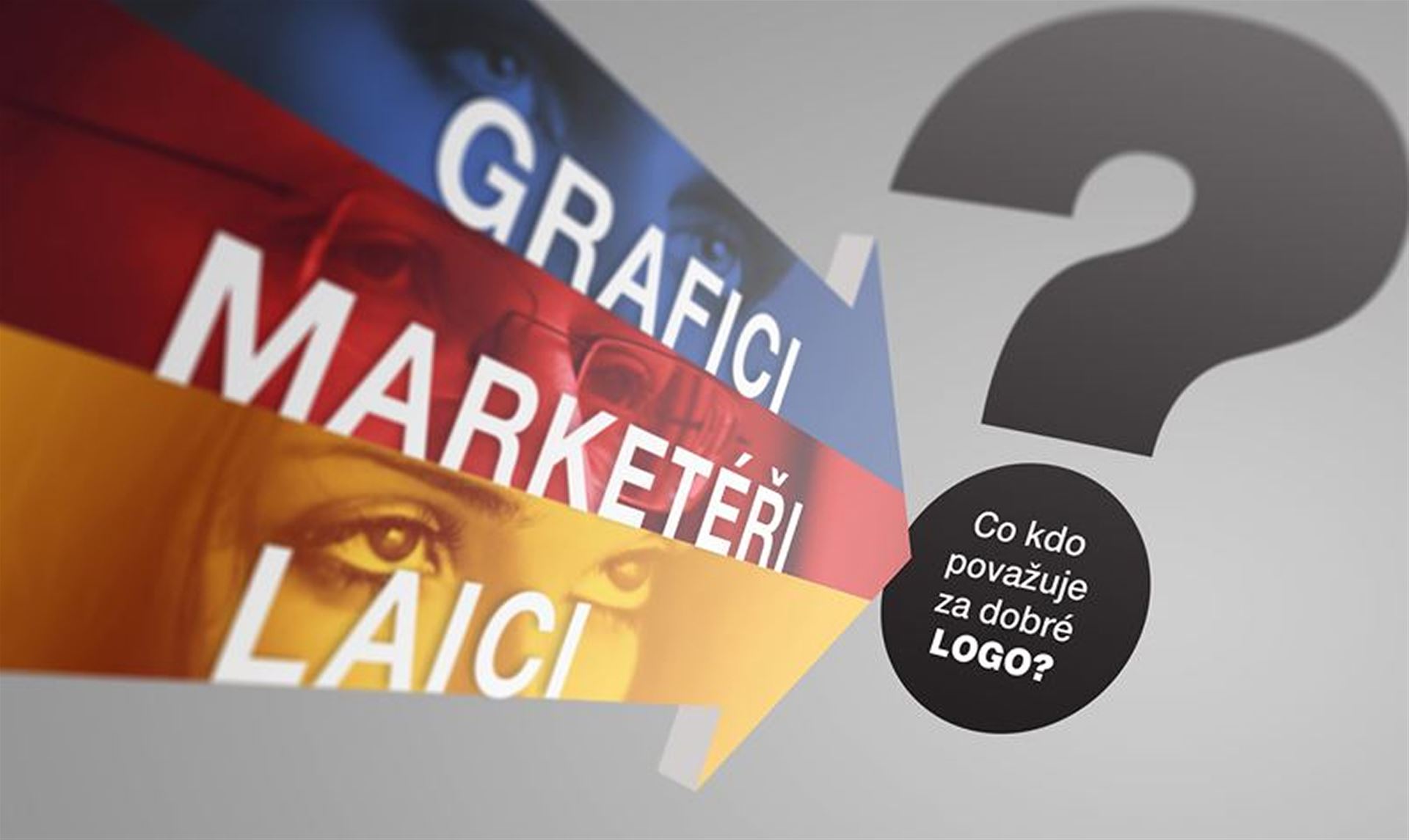
A good logo? How do the eyes of a designer, a marketer, and a consumer differ? The survey brings surprising answers.
A unique survey among three groups of respondents
here is no universal recipe, but there are methods that can take you from a blank sheet of paper to promising ideas. Here are six approaches we use when creating brand names.
A good name starts with a good brief – and careful listening. We pay attention to the subtle nuances behind the idea and the motivations that lead a client to launch a new brand or embark on a rebrand. Asking the right questions helps us understand what the new name should express, how it should feel and where it should take the brand. Once we know what we are looking for, we can start thinking about what to call it. And there are some tried-and-tested ways to get there.
Write down words related to your brand. Combine them. Shorten them. Add or remove syllables. Change the spelling. Make them rhyme. See what happens.

Quadrangle. Quattro. Quality. QUADRIO. When searching for the right name, we combined meanings, sounds and fragments of words related to the character of the project. Read more about how the name Quadrio was created.
Take your list of brand-related words and start combining parts of them into something new. Mix beginnings, syllables and sound variations. The result can be a completely new name that carries several meanings at once.

Read how we helped developers from the Volkswagen Group change their name and kick-start their transformation into a distinctive, confident brand in our Digiteq case study.

We explored another way of capturing the essence of a brand in its name in our Movisio case study.
Find something that is genuinely characteristic of the brand or product. Make a list of words you want people to associate with your brand, then add other words that evoke similar associations. Metaphors can help a name express emotions, ambitions or the principles a brand stands for.

For residential developments, a “great location” is almost a generic selling point. Large built-in planters integrated into the façade are not. A distinctive architectural feature can become the name, positioning and visual identity of an entire project.
One of the simplest – and often overlooked – approaches. Write down words related to your brand and add as many synonyms as possible. Then explore how those words translate into other languages.

Translation should never be arbitrary. We are not looking for “a nice foreign word”. We are looking for another language for a meaning we already have.
For a premium residential development near Belgrade, for example, we wanted an internationally appealing name with a connection to the place. Ardea means heron. It evokes lightness and airiness – and herons actually live in a nearby nature reserve.
A name does not have to carry a lexical meaning. It can work through sound, rhythm, memorability and emotion. Experiment with different combinations of sounds and syllables. Say them out loud. Look for words that are easy to pronounce and easy to remember.

That feeling of the first push on a scooter. The speed, the wind in your hair, the sheer joy of movement. “Yedoooo!” The name was created phonetically, without needing to mean anything specific. It is short, playful and easy to pronounce across languages.
Sometimes you do not have to look far. Researching a place can reveal treasures hidden right where the new name is needed. Explore place names, shortened versions, local expressions and other ways of connecting the location with the character of the brand.
If a place has a strong history, naming does not have to overwrite it. Quite the opposite. A good name can help a new project build naturally on what was there before – and make it easier for the project to become accepted as part of the place.

Sometimes the best name is not invented. It is found. Three buildings connected by a pleasant courtyard, one of them incorporating the well-known Olympik arcade. No creative gymnastics required. Once we suggested this direction, the answer was obvious.
One of the most traditional approaches is to name a brand after its founder. Over time, a person’s name becomes the name of a company, building its own history and reputation. Baťa, Deichmann, Škoda and Ford are all examples.
An abbreviation can be a practical solution when the original name is simply too long. It is usually formed from initial letters and, over time, can acquire a meaning of its own, no longer obviously connected to the full original name. Examples include ČSOB (Československá obchodní banka) and KFC (Kentucky Fried Chicken).
Sometimes the best solution is a name that simply and clearly says what an organisation is or what it does. This approach is particularly common among public institutions, cultural organisations and organisations with a long tradition. Examples include Česká spořitelna (Czech Savings Bank), Národní galerie (National Gallery) and Český statistický úřad (Czech Statistical Office). The strength of these names lies primarily in their clarity. Over time, they can build powerful associations through what the organisation does and the reputation it earns.