Menu

How to turn a database into a competitive advantage?

Client

Preciosa

At the beginning, there was a wish to make an online visual style manual accessible. Gradually, however, we uncovered the potential of additional content that had previously caused the client difficulties rather than benefits, and we realized what business opportunities its accessibility offers alongside the right tools.

What we did

Digital  –  Campaign

It started with one book...

Preciosa Lighting is a traditional Czech manufacturer of classic and modern crystal light fixtures and executes demanding lighting contracts in prestigious interiors worldwide. It has an uninterrupted several-hundred-year tradition of glass production, and thanks to this, it is one of the few companies in the world capable of manufacturing chandeliers under one roof.

We began collaborating with Preciosa Lighting on the luxurious Project Book catalog, which showcases the most prestigious Preciosa Lighting implementations around the world. We continued with advertisements, small printed matter, exhibition presentations, and residential lighting catalogs. And perhaps because we sometimes asked questions "to the point of annoyance" and probed the meaning and function of things, after two years of cooperation they asked us for help with their communication strategy. This included the brand definition and formulation of the tagline.

Part of the process was also organizing and supplementing content resources – texts, photos, and documents for marketing. We did that and deployed Identity Online, a web application we developed for managing communication content. This was to make sure that the order was accessible to everyone and maintained going forward.
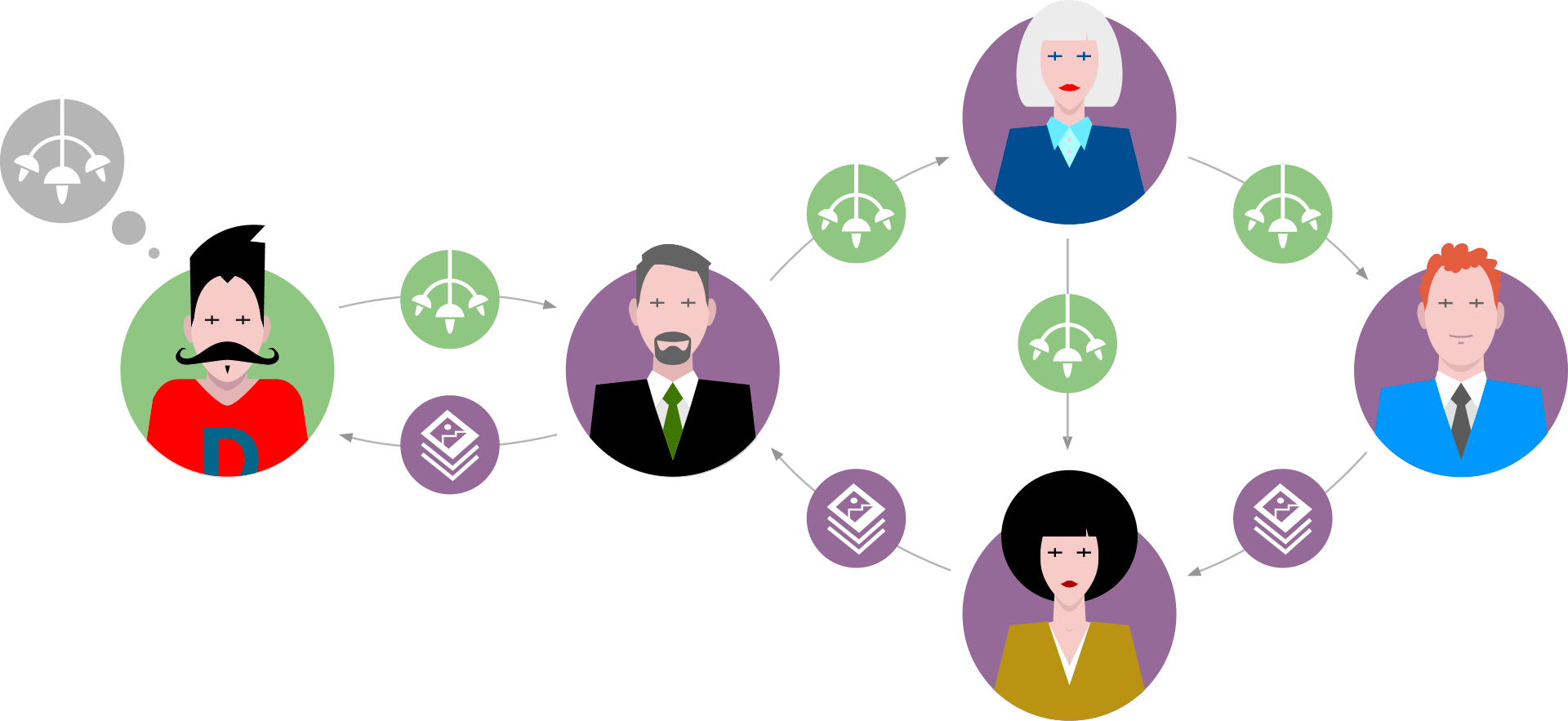
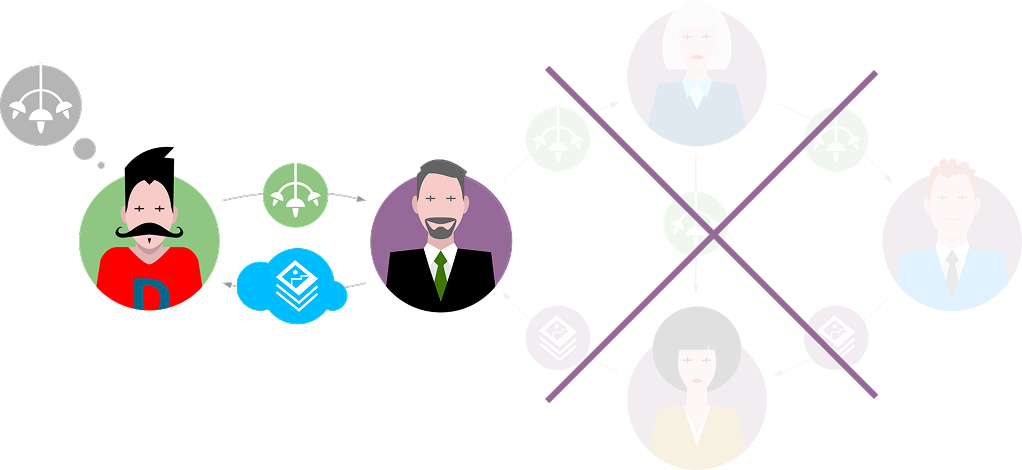
...and gave rise to Preciosa Creative Network - an online tool that pushed cooperation with architects and designers miles ahead


But first things first.

On lighting projects for large clients, Preciosa Lighting often cooperates with renowned design studios and architects. It needs to convince them that it is an excellent manufacturer as well as technologist – and the designers then help convince the customer. It used to work like this: a designer asked a salesperson, the salesperson forwarded the request or idea to marketing, they searched for and compiled relevant photographs for the salesperson, and the salesperson handed them over to the designer. Sometimes multiple times. A tedious and demanding process, during which a lot was forgotten or lost in translation, and it certainly did not foster creativity.

"And what if we used Identity Online during cooperation with designers too?"

First, we conducted a very informal and very rough user research: the sales staff asked a few designers if there would be interest in something similar ("yes!") and if anyone else offered it ("no").

It was clear to us that this would not be just a minor tweak to the original application, and upon agreement with the client, we decided to rebuild the system from scratch and put together a four-point battle plan:


1. Identity Online Upgrade

Research into what needs to be modified/added in the application, prototyping, solution development.
Done by AnFas.


2. Content Curation

Using the knowledge and experience of sales representatives to select the right inspiration - what to give designers access to, what new material to add to the library, and what to discard from it.
Done by Preciosa Lighting.


3. Promotion of the New Tool

Make it accessible, promote it, and excite designers about the new tool. Explain why they should use it.
AnFas will prepare the tools, but the actual work will be up to Preciosa Lighting and its sales staff.


4. Profit

If points 1 to 3 succeed in simplifying the work for designers, Preciosa Lighting will profit from it.

How to improve the user experience?

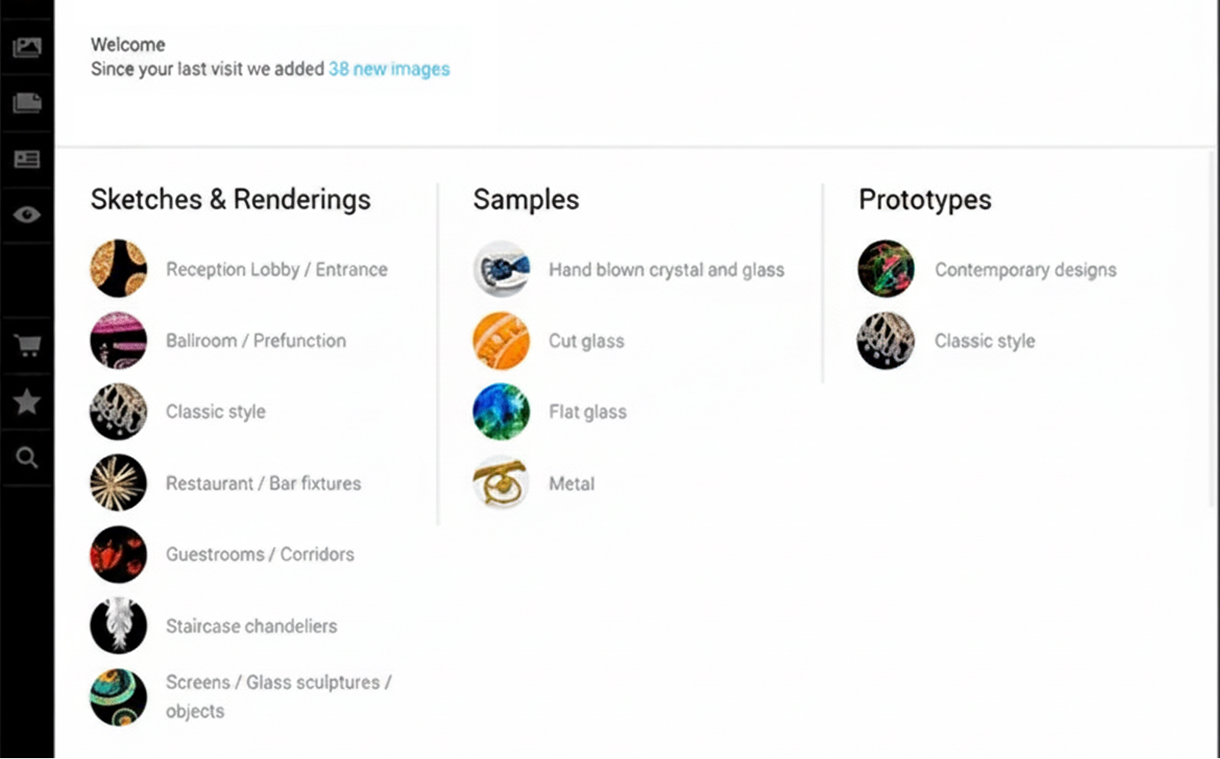
We started by taking the original Identity Online application and doing a Big Cut. We removed rarely (or rather not at all) used features that complicated the user interface and increased the difficulty of maintaining the application code, and conversely, added several requests and user insights. For example, more space for the content itself and keeping the application "invisible" in the background, easy sharing of content, and the possibility of content customization for different user groups.

Prototype: Quick testing saves time and nerves

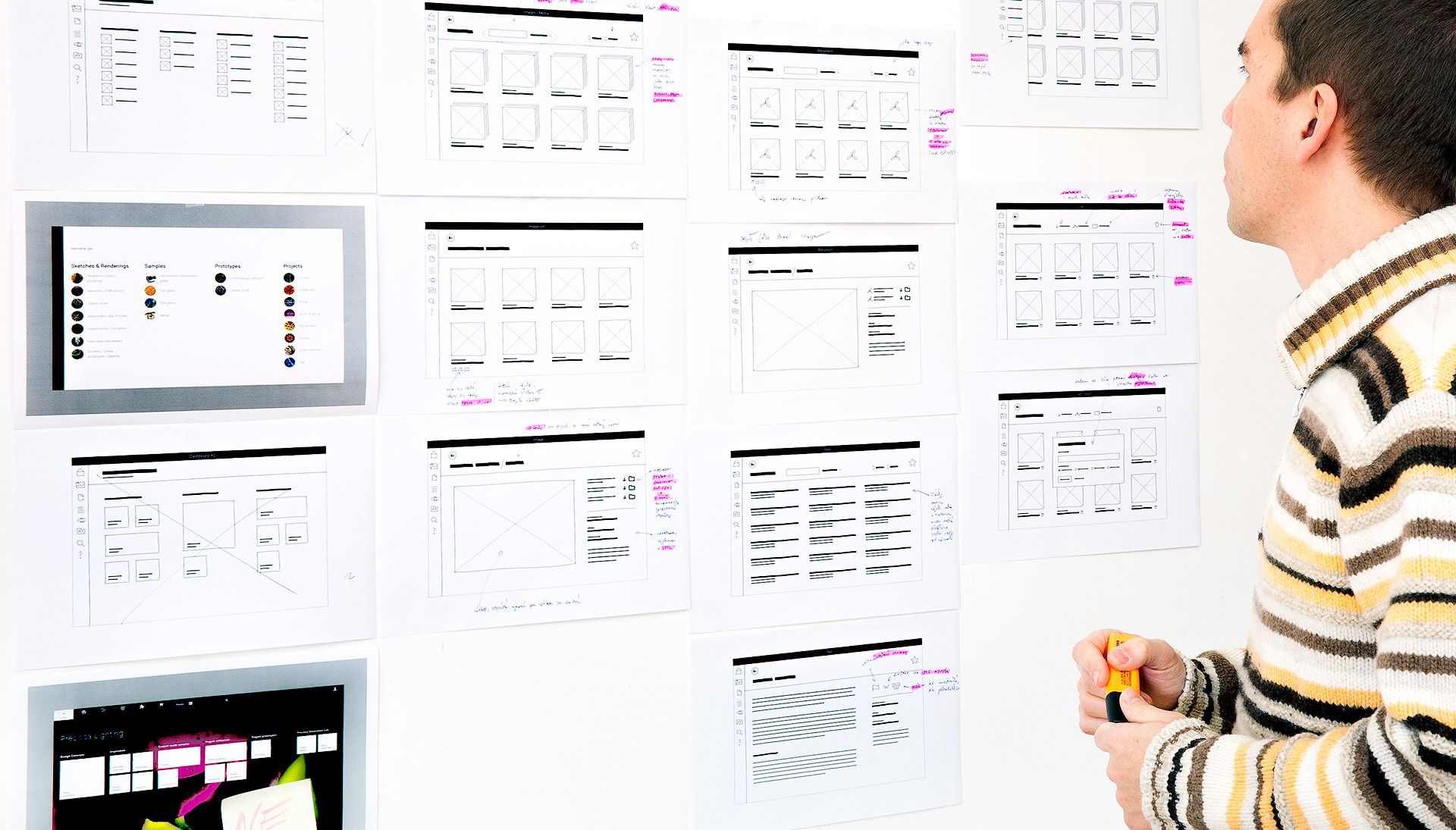
To quickly verify the set direction, we started with a paper prototype. We went through typical scenarios, and when we didn't hit any dramatic roadblocks, we dove into working on an interactive prototype without unnecessary delay.

For the backend foundation we used our own meta-cms JellyPot, which also ran the previous version of the application. For the frontend, we chose the JavaScript framework AngularJS. We had almost no experience with it, but it seemed practical at least for prototyping the application, and in case of failure, we could quite easily return to generating views on the server. However, AngularJS turned out to be a good choice. By iterating the prototype, we worked our way to a functional frontend part of the application – and moreover, it directly represented the specification for the necessary expansions of JellyPot and the API on the server.

identity online
Identity Online

Beta: Informal demonstration, great enthusiasm

We quickly hacked together at least a basic connection to the server infrastructure and released the application for testing by selected users from Preciosa Lighting's marketing. Their insights allowed us to make the right decisions regarding the UX design of many elements of the application. We gradually developed the server part and constantly integrated it with the frontend. Thus, the prototype slowly became a finished application. A few sales reps from Preciosa Lighting showed it informally to selected designers. Everyone wanted it. Everyone was enthusiastic.

So we performed data replication, migrated the current database, redirected old links to shared content, took a breath, and switched the applications.


Everything functions. What next?

Of course, there were plenty of minor things left to smooth out based on user feedback. They are the best testers. However, the technical part of the execution was more or less done. So what next?

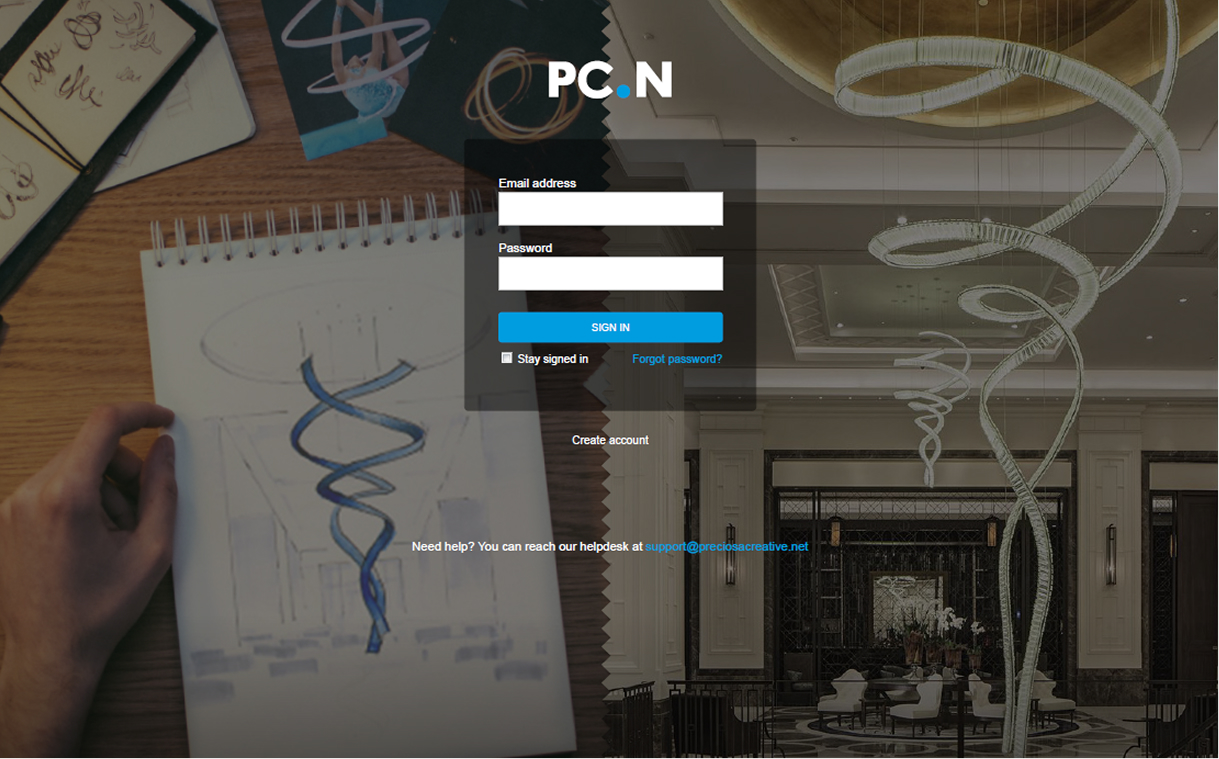
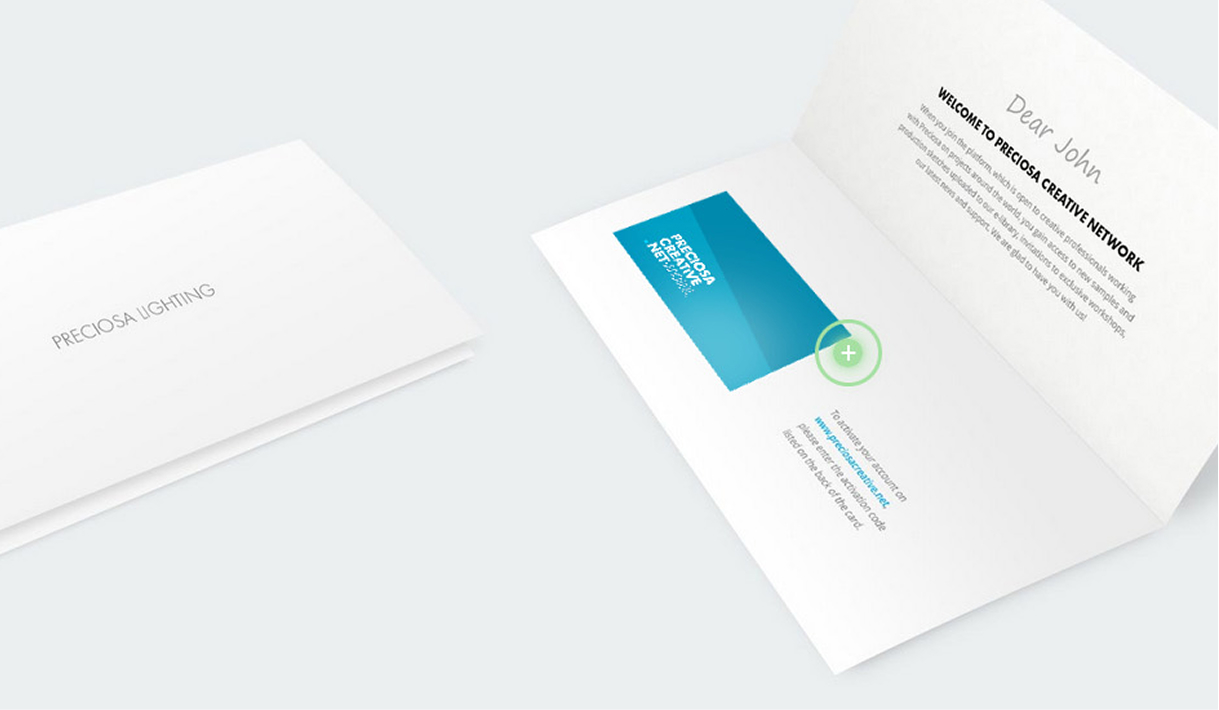
Together with Preciosa Lighting, we also tried to find other things that designers might be interested in and that PCL could offer. Alongside the library itself, we added two more sections: info (tips, expert views, technological innovations) and lab (workshopy, konference, tvůrčí setkání). We finalized the name, visual style, and launch of the new tool. Designers then received a personal invitation with a ticket in the form of a plastic card with an entry code and instructions for account activation.

We handed the invitations and cards with activation codes to the sales staff, and they released them into the world. In total, 1600 accesses were distributed, and users activated more than 400 of them during the first year. Average monthly activity reaches almost 70%, and according to information from Preciosa Lighting, PC.N helped them secure several contracts.

Can we help with effective communication for your company too?

Get in touch with us.


What we learned

Pavel Kappel

Copywriter

From a data storage to a business tool

Probably the simplest summary of our multi-year development is that you can look at everything as an opportunity. What originally started out just as a web document storage, we transformed in cooperation with the client into a functioning marketing tool that helps them look after their main partners - interior designers - thereby giving them an important competitive edge.

Jan Plíhal

Designer, web developer

Agilely and efficiently

The agile approach with continuous iteration of the prototype proved to be a good choice. Together with Preciosa Lighting, the process helped us clarify what we were developing and where we were heading. We were also able to begin user testing very early on and thus flexibly react to any feedback. But most importantly, it allowed us to focus on the truly essential features and functions, reaching functional software relatively quickly. While we continued to improve it step by step, we could take it and deploy it into live operation at any moment. The application could thus start bringing benefits precisely at the moment we agreed with Preciosa Lighting that "it is done" – and not only after it reached a state described in some academic formal specification.

Insights

Follow our social media